
Estate Planning Attorney in Charleston, SC
Flat-fee wills, living trusts, and powers of attorney for Charleston families — virtual planning, no office visit required.
Ryan's take for Charleston families
Estate planning should fit the way your family actually lives. For Charleston clients, that often means making the process remote, clear, flat-fee, and coordinated across wills, trusts, powers of attorney, healthcare documents, and beneficiary planning.
Ask Ryan about your plan →Protecting your family starts with the right documents
If you live in Charleston and die without a will — legally “intestate” — South Carolina law decides who inherits, who raises your children, and who manages your affairs. That choice belongs to the state unless you make it yourself.
A working Charleston plan usually combines four documents: a Last Will and Testament, a Durable Power of Attorney, a Healthcare Power of Attorney, and a Living Will. Households with real estate, blended families, or minor children often add a Revocable Living Trust to keep the estate out of Charleston County probate.
Ryan P. Duffy works with Charleston families entirely remotely — documents drafted, reviewed, and signed under in-home mobile notary signing. Flat fees, no hourly billing, no office visits.
SC intestacy: SC intestacy under Title 62 divides the estate by formula, not by what the deceased actually wanted. Spouse takes one-half; descendants take one-half. Step-children and unmarried partners are outside the statutory line.

Estate planning for Charleston residents
Charleston is South Carolina's oldest city — and its estate planning needs reflect both deep historic roots and a rapid 21st-century transformation. The Charleston peninsula and surrounding islands (Mt. Pleasant, Sullivan's Island, Isle of Palms, Kiawah, Seabrook, Folly Beach, James Island, Daniel Island) contain some of the most valuable residential real estate in the Southeast. Median home values exceed $580,000 county-wide; South of Broad addresses regularly exceed $2 million. The combination of historic property, waterfront homes, and significant out-of-state inflows of retirees creates estate planning complexity rarely seen elsewhere in the Carolinas.
Charleston's client base divides roughly into five overlapping groups: long-time Lowcountry families with multi-generational property holdings; military families connected to Joint Base Charleston with multi-state tax and benefit issues; healthcare professionals in the MUSC (Medical University of South Carolina) ecosystem; retirees relocated from the Northeast and Midwest with significant retirement assets and complex pre-existing trusts from other states; and second-home owners managing SC properties from primary residences in NY, NJ, MA, CT, OH, or PA. Each group has specific planning needs.
Ryan handles Charleston engagements with attention to these specific dynamics: historic property valuation challenges (assessor records often do not reflect actual market value), flood/wind insurance and coastal property considerations, retiree transitions with pre-existing out-of-state estate plans, and military spouse domicile and SCRA issues. SC's probate code (Title 62) requires formal Probate Court administration in many situations — making trust-based planning particularly valuable here.
Statutory framework: Charleston County estates are administered under S.C. Code Title 62 — intestate succession follows S.C. Code § 62-2-102, will execution must satisfy S.C. Code § 62-2-502, and probate jurisdiction is set by S.C. Code § 62-3-101.
Common situations we see in Charleston
A few situations show up over and over in Charleston consultations. The plan that fits a banking professional with RSUs is not the plan that fits a multi-generational landholder — here is what we see most often.
Charleston neighborhoods and communities
Ryan serves clients across Charleston and Charleston County — all virtually, with no office visit required.
South Carolina requirements every Charleston resident should know
South Carolina wills require two witnesses under S.C. Code § 62-2-502; holographic wills are not valid. A self-proving affidavit at § 62-2-504 lets the Charleston Probate Court admit the will without calling witnesses. Durable financial powers of attorney follow S.C. Code §§ 62-8-101 et seq.; healthcare directives follow the SC Death with Dignity Act (§§ 44-77-10 et seq.) and require two qualified, disinterested witnesses. A funded revocable trust under S.C. Code § 62-7-401 avoids Charleston County Probate Court entirely.
Citations and the broader framework: South Carolina estate planning guide.
Gullah/Geechee Heritage Land, Marsh Conservation, and Charter Business Succession
Charleston’s planning issues are deeply tied to land — ancestral, environmental, and commercial. The Gullah/Geechee corridor along the Sea Islands, the marshes and tidal creeks of the Lowcountry, and the working waterfront from Shem Creek to the Maritime Center all generate planning problems that demand more than a generic revocable trust.
Gullah/Geechee Heritage Property
From Johns Island to Wadmalaw, Edisto, and the McClellanville corridor, thousands of acres of African American heritage land have been held in family for five or six generations, often through informal succession after Reconstruction-era land acquisition. South Carolina’s Clementa C. Pinckney Uniform Partition of Heirs’ Property Act, codified at S.C. Code § 15-61-310 et seq., provides critical protections: court-ordered appraisal, a right of first refusal among cotenants, and a statutory preference for partition in kind over forced sale. Heirs’ property remains the largest single cause of African American land loss in the Lowcountry, and the planning intervention is straightforward:
- Order a heir-search title report to identify every living cotenant.
- Obtain deeds of distribution where prior decedents’ estates were never probated; under S.C. Code § 62-3-901, a probate or deed of distribution is required to confirm title flowing from intestate decedents.
- Consolidate ownership through a family LLC, with membership interests held in revocable trusts.
- Record a notice of family land in the public records to flag the property for any future tax-sale or quiet-title action.
Marsh and Conservation Easements
Lowcountry property frequently includes substantial tidal marsh, hardwood bottomland, or rice-field acreage that is far more valuable conserved than developed. A conservation easement granted to a qualified holder — the Lowcountry Land Trust, Ducks Unlimited, or the Open Space Institute — generates a federal income-tax deduction under IRC § 170(h) and a South Carolina state income-tax credit under S.C. Code § 12-6-3515, currently capped at $250 per acre with an aggregate annual ceiling. The credit is transferable, which creates a secondary market that can significantly increase the donor’s net economic benefit.
Charter, Yacht, and Hospitality Business Succession
The Charleston waterfront supports a dense ecosystem of charter fishing operations, sailing schools, dock-and-dine restaurants, and small-fleet yacht charter businesses. These operations carry US Coast Guard documentation, captain’s licenses tied to individual operators, commercial insurance with named-captain endorsements, and frequent seasonal cash flow. A succession plan should:
- Hold vessels in a documented LLC, with USCG documentation issued in the LLC’s name to avoid retitling at death.
- Pre-identify a successor captain meeting the Coast Guard licensing requirements who can step in without interrupting charter contracts.
- Address business interruption and key-person insurance, particularly for owner-operators whose captain’s license is functionally the business’s most valuable asset.
Estate planning services for Charleston families
Every plan is customized to your family, your assets, and South Carolina law — never a one-size-fits-all template.
A South Carolina-valid will covering distribution, executor appointment, and (for parents) guardianship for minor children. The non-negotiable starting point.
For Charleston households with real estate, blended families, or privacy needs — transfers without court involvement.
Authorize a trusted person to handle finances and medical decisions if you can't — before a hospital or bank is the one asking.
End-of-life medical wishes documented so Charleston hospitals — and your family — know exactly what you want.
Transparent flat fees for Charleston households — quoted before any work begins, no hourly billing.
Digital asset language drafted to actually work: crypto wallets, online accounts, and South Carolina's digital assets statute.
What happens without an estate plan in Charleston
Understanding the local probate process is one of the strongest reasons to plan ahead.
In Charleston the probate process is what most people imagine when they hear "estate": the will gets filed with Charleston County Probate Court, a personal representative qualifies under S.C. Code § 62-3-301, creditors are noticed under § 62-3-801, and the court signs off on the final settlement. Public, slow, and exactly the thing a properly funded revocable trust is designed to skip.
⚖ Charleston County Probate — Key Facts
- Court: Charleston County Probate Court
- Address: 84 Broad St, Charleston, SC 29401
- Filing fee: Determined by estate value under S.C. Code § 62-3-720
- Process: Open via informal probate where possible (S.C. Code § 62-3-301), publish creditor notice, settle the estate under court supervision
- How to avoid it: A funded revocable trust; beneficiary designations on retirement, life insurance, and POD/TOD bank accounts; joint tenancy with right of survivorship
- Charleston County Probate Court: 84 Broad St, Charleston SC 29401 — handles both formal and informal probate administration under SC Code Title 62
- Probate Judge: Charleston County Probate Court is presided over by an elected probate judge (currently a full-time position) — formal proceedings are heard by the judge personally for contested matters
- Filing Procedures: Charleston County requires original documents in person for initial filings; subsequent filings can often be submitted by mail
- Ancillary Probate: Out-of-state decedents with Charleston County real property require ancillary probate — typically takes 6–12 months and runs concurrent with the home state probate
- SC Code Title 62: SC's Uniform Probate Code is more formal than NC's — even informal estates require specific filings, creditor notice (8-month period), and final accountings
For Charleston families, a revocable trust can reduce probate for assets properly transferred to it. Ryan's trust-based plans include deed work for the first deed (typically the primary residence), plus detailed instructions explaining how to fund the trust with each asset. Clients carry out account retitling, beneficiary updates, and other transfers themselves. This is funding guidance, not a done-for-you service: institution letters, funding-completion checklists, funding verification, and ongoing funding reviews are not included.
How Charleston families complete their estate plan
Three steps to a signed South Carolina estate plan — usually completed in under three weeks.
Intake Call (Free)
A short remote consultation to understand the household, the assets, and the goals. You leave with a clear recommendation and a fixed quote.
Custom Drafting
Ryan personally drafts every document — no paralegal, no template — tailored to the assets and family structure discussed on the intake call.
Document Execution
Final video call — review, witness, notarize, sign. mobile notary signing-executed originals delivered as tamper-evident PDFs, valid statewide.
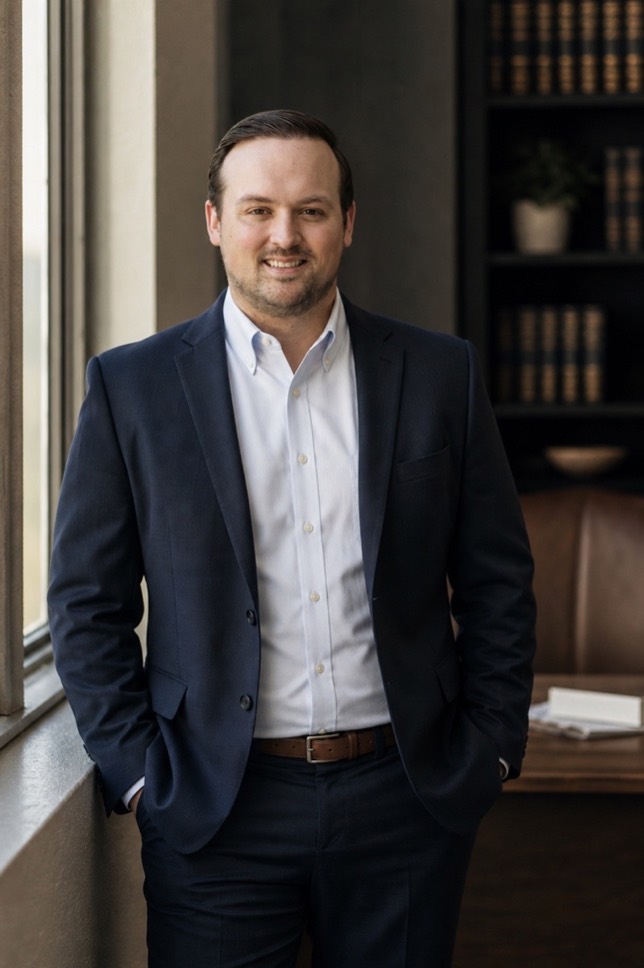
Ryan P. Duffy, Esq.
Every Charleston client gets Ryan personally — the same attorney from intake through drafting and signing. Estate Planning of the Carolinas exists to deliver that kind of attention to South Carolina households without requiring an office visit or hourly billing.
Estate planning FAQ for Charleston, SC
South Carolina areas near Charleston
All-SC coverage, remotely. Other communities near Charleston that Ryan works with regularly:
Make the plan official — from your Charleston living room
Book a free 30-minute remote consultation call. Flat-fee quote, no obligation, SC-licensed counsel.