Living Will vs. Health Care Power of Attorney in North Carolina: What’s the Difference?
March 15, 2026 · Ryan P. Duffy


Two Documents. Two Very Different Jobs.
People mix up living wills and health care powers of attorney constantly — and it’s an understandable mistake. Both documents deal with your medical care. Both only come into play when you can’t speak for yourself. And both are essential parts of a complete North Carolina estate plan. But they do fundamentally different things. Confusing them — or assuming you only need one — can leave dangerous gaps in your planning. Here’s how they work, how they differ, and why you almost certainly need both.
These medical documents do not authorize someone to manage bank accounts, taxes, or real estate. A separate durable financial power of attorney fills that role.
What Is a Living Will in North Carolina?
A living will is a written legal document that expresses your wishes about end-of-life medical treatment. In North Carolina, it’s officially called a Declaration of a Desire for a Natural Death, though most people just call it a living will or advance directive. The core purpose of a living will is simple: it tells your doctors and family what life-sustaining measures you do or don’t want if you’re in a terminal condition, are permanently unconscious, or have end-stage disease with no reasonable chance of recovery. Typical decisions a living will covers:
Attorney-reviewed: Reviewed by Ryan P. Duffy, a North Carolina and South Carolina estate planning attorney. Last reviewed: May 25, 2026. Estimated read time: 10 minutes.
Key takeaways
- A healthcare power of attorney names the person who can make medical decisions if you cannot.
- A living will states end-of-life treatment preferences.
- HIPAA authorization helps the right people receive medical information when they need it.
Healthcare documents are where estate planning becomes very human. They give your family a voice, instructions, and legal authority when medical decisions are hardest.
Want help applying this to your family?
Estate Planning of the Carolinas helps North Carolina and South Carolina families build flat-fee plans that fit their assets, decision-makers, and goals.
Schedule a Free Consultation- Whether you want CPR if your heart stops
- Whether you want to be placed on a ventilator
- Whether you want artificial nutrition and hydration (feeding tubes)
- Whether you want other life-prolonging procedures
- Your preferences around pain management and comfort care
The living will speaks directly to medical providers. It does not require another person to act on your behalf; it records your instructions. Under N.C.G.S. § 90-321(c), it must be signed by the declarant in the presence of two qualified witnesses and proved before a clerk or assistant clerk of superior court or a notary public. The statute’s qualified-witness criteria do not state a blanket age-18 requirement. Provide a copy to your physician and any health care facility where you receive treatment.
Ready to protect your family?
Estate Planning of the Carolinas offers flat-fee, virtual estate plans for NC and SC families. No office visit required.
Schedule a Free Consultation →What Is a Health Care Power of Attorney in North Carolina?
A health care power of attorney (HCPOA) does something completely different: it designates another person — your health care agent — to make medical decisions for you when you can’t make them yourself. Unlike a living will, which deals only with end-of-life situations, a health care power of attorney covers the full range of medical decisions. Your health care agent can:
- Authorize or refuse medical treatment on your behalf
- Access your medical records
- Hire and fire medical providers
- Decide which hospital or facility you’re admitted to
- Consent to or refuse surgery, medication, and procedures
- Make decisions about home health care, rehabilitation, and long-term care
- Communicate your wishes to your medical team in real time
This document appoints a person who can respond to new information, ask questions, and advocate for you. Under N.C.G.S. § 32A-16, an NC health care power of attorney must be signed in the presence of two qualified witnesses and acknowledged before a notary public. Under N.C.G.S. § 32A‑20(a), a health care power of attorney becomes effective when the principal’s designated physician or physicians determine in writing that the principal lacks sufficient understanding or capacity to make or communicate health-care decisions; only in the case of mental health treatment may that decision-maker be a physician or eligible psychologist, with the attending professional serving as the statutory fallback if no designee can act.
Living Will vs. Health Care Power of Attorney: Side-by-Side

Here’s the clearest way to understand the difference: Living Will: A written statement of your medical preferences — specifically for end-of-life situations. It speaks for you directly, without requiring another person to act. Health Care Power of Attorney: An appointment of a trusted person to make real-time medical decisions on your behalf in any situation where you lack capacity. It speaks through a person, not a document. Think of it this way: a living will is your voice on paper. A health care power of attorney is your voice through another person. A living will handles the “what” — what you want done. A health care POA handles the “who” — who makes the decisions. They work together, not in competition.
What Happens Without These Documents?
Without a living will, your doctors and family are left guessing about your end-of-life wishes. Families are forced to make agonizing decisions without guidance, often under the worst possible circumstances — disagreeing with each other, second-guessing themselves, and risking exactly the kind of medical interventions you never wanted (or didn’t want to be withheld). Without a health care power of attorney, no one has clear legal authority to make medical decisions for you. North Carolina law does allow a “health care representative” — typically a spouse or close family member — to step in, but this process has limitations and can lead to confusion, delays, or family conflict about who has the right to decide. In the worst cases, a court has to appoint a guardian to make medical decisions. That process takes time, costs money, and results in a court-appointed stranger making deeply personal decisions about your care.
Do You Need Both in North Carolina?
Yes. Emphatically yes. Here’s why: A living will doesn’t cover every situation — it specifically addresses terminal conditions, permanent unconsciousness, and end-stage disease. If you’re incapacitated for any other reason (a serious accident, temporary cognitive impairment, surgery complications), your living will doesn’t apply. Your health care agent does. Conversely, a health care power of attorney gives your agent broad authority — but it doesn’t tell them what you actually want. Without a living will, your agent has to guess. They carry that decision-making burden alone, with no written guidance from you. That’s an enormous weight to put on another person. Together, these two documents create a complete advance directive system. Your living will gives your agent (and your doctors) specific written guidance. Your health care POA gives your agent legal authority and the flexibility to handle situations your living will didn’t anticipate.
Who Should Be Your Health Care Agent?
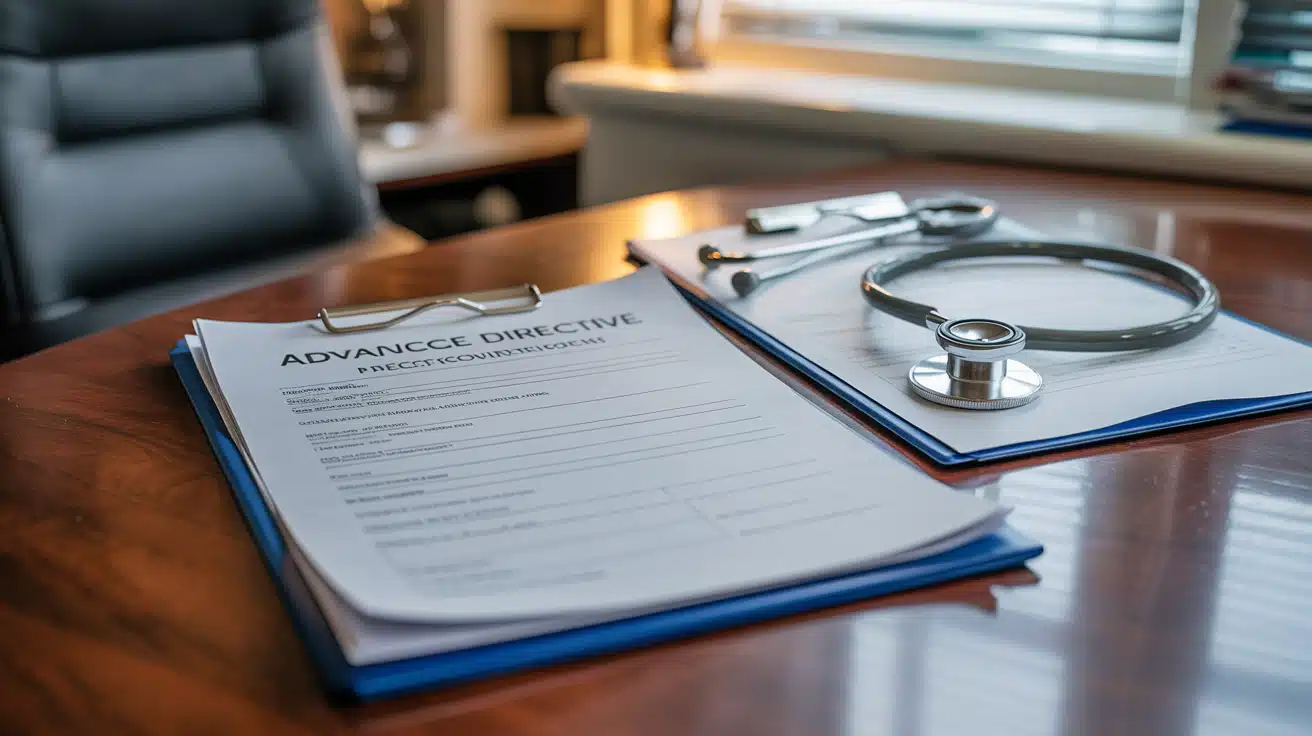
Choosing your health care agent is one of the most important decisions in your estate plan. This person will make real-time medical decisions — potentially life-or-death decisions — on your behalf. Choose someone who:
- You trust completely and who knows you well
- Can handle stress and make difficult decisions under pressure
- Will honor your wishes even if they personally disagree
- Is accessible and available — ideally local, or able to travel
- Can communicate clearly and assertively with medical professionals
Under N.C.G.S. § 32A-18, a health care agent must be a competent person age 18 or older who is not providing health care to the principal for remuneration. Choose someone who understands your wishes, can communicate under pressure, and can serve when needed, and name a qualified backup agent.
How to Make Both Documents Valid in North Carolina
For a living will in North Carolina, the document must:
- Be in writing
- Be signed by you (the declarant)
- Be witnessed by two qualified witnesses who satisfy N.C.G.S. § 90-321(c)(3)
- Be proved before a clerk or assistant clerk of superior court or a notary public
For a health care power of attorney in North Carolina, the document must:
- Be in writing
- Be signed by you as the principal
- Be witnessed by two qualified witnesses who satisfy N.C.G.S. § 32A-16(6)
- Be acknowledged before a notary public
Once signed, provide copies to your health care agent, your primary care physician, any hospitals or facilities where you’re likely to receive care, and your estate planning attorney. Keep the originals somewhere accessible — not buried in a safe deposit box that no one can open in an emergency.
When to Create These Documents
The right time to create your advance directives is right now — while you’re healthy, clear-headed, and under no pressure to make quick decisions. These documents require mental capacity to execute validly. If you wait until you’re seriously ill or cognitively impaired, you may have waited too long. A serious accident, a sudden stroke, or an unexpected diagnosis can take away your ability to sign documents overnight. No one plans to need these documents tomorrow. But the people who have them in place are the ones whose wishes actually get honored.
Get Both Documents Done Right

A living will and health care power of attorney aren’t just legal formalities — they’re gifts to your family. They remove impossible decisions from your loved ones’ shoulders and ensure your medical care reflects your values, not a court’s best guess. At Estate Planning of the Carolinas, we help North Carolina families create complete advance directive packages as part of a comprehensive estate plan. We work virtually, charge flat fees, and make the process straightforward. You shouldn’t have to wrestle with legal complexity to protect yourself and your family. Schedule a free consultation to get your living will and health care power of attorney in place today.
Understanding Healthcare Power of Attorney in North Carolina
A healthcare power of attorney (HCPOA) is one of the most important advance directives a North Carolina resident can have. It lets you appoint someone — a trusted individual — to make healthcare decisions on your behalf if you become unable to communicate your own wishes. Your healthcare agent steps in when you’re unconscious, incapacitated, or simply unable to make healthcare decisions for yourself. Choosing someone you trust is essential. Your healthcare agent needs to understand your care preferences, your values, and your medical wishes — and be willing to advocate for them even under pressure from family members or healthcare providers. That’s a big job, and not everyone is right for it. In North Carolina, your healthcare power of attorney document must be signed in the presence of two witnesses and a notary public. You must notarize the document to make it valid. Unsigned or improperly witnessed documents can be ignored by healthcare providers in a crisis — exactly when you need them most.
What a Living Will Actually Covers
A living will — also called a declaration of a desire for a natural death in North Carolina — documents your medical wishes for specific end-of-life situations. It tells healthcare providers what life-sustaining procedures you do or don’t want if you’re in a terminal condition, a persistent vegetative state, or an end-stage condition. For example: Do you want to be kept on a ventilator indefinitely? Do you want feeding tubes? Do you want doctors to prolong your life through artificial means even when there’s no realistic chance of recovery? A living will answers these questions in writing before you face them. Living wills and advance directives work together. A living will covers your specific care preferences for specific medical conditions. A healthcare power of attorney covers the person who handles everything else — the medical choices your living will doesn’t specifically address.
Advance Care Planning: Why Having Both Documents Matters

Advance care planning means thinking through your future medical wishes and putting them in legally binding documents. In North Carolina, a complete advance care plan includes both a living will and a healthcare power of attorney. Living will and advance directives alone aren’t enough. Without a healthcare agent, your living will may not cover every situation that arises. And without a living will, your healthcare agent is left guessing about your end-of-life preferences. Together, the documents give healthcare providers and your family a complete picture of your healthcare wishes. Make healthcare decisions now while you’re able to. Waiting until you’re unable to make decisions yourself means leaving those decisions to a court — or to family members who may disagree, leading to painful and expensive legal disputes.
Mental Health Advance Directives in North Carolina
North Carolina is one of the few states that specifically allows an advance instruction for mental health treatment. Sometimes called an instruction for mental health treatment, this document lets you specify your preferences for psychiatric care if you become unable to make healthcare decisions due to a mental health crisis. This is separate from a standard living will and healthcare power of attorney, but it follows similar logic: you appoint someone you trust, document your healthcare wishes, and give healthcare providers clear direction so they’re not making those calls without your input.
Take Control of Your Future Health Care Decisions
Take control of your future medical care by creating these documents while you’re healthy and of sound mind. Once you’re unable to communicate, it’s too late. A living will and healthcare power of attorney together give you — and your family — peace of mind that your care preferences will be honored, no matter what happens. At Estate Planning of the Carolinas, we handle healthcare directives as part of our flat-fee estate planning process. We make it easy to document your medical wishes, appoint someone to make healthcare decisions on your behalf, and notarize your documents properly — so they work when you need them most.
Get Both — Without the Confusion
A living will and a healthcare power of attorney work together to cover every scenario. Our flat-fee estate planning packages include both documents — prepared by a licensed NC & SC attorney and delivered virtual planningly.
See Our Flat-Fee Plans →Related reading from Carolina Estate Plan: ancillary estate planning documents (HIPAA, personal property memorandum) · Wilmington.


Related estate planning guides
Use these next if you are comparing wills, trusts, probate avoidance, and the cost of a complete plan.
Have questions about your estate plan?
Ryan P. Duffy is a North Carolina and South Carolina licensed estate planning attorney. Schedule a free, no-pressure consultation to discuss your family's specific situation.
Schedule Your Free Consultation